
 Keynote and Plenary Speakers
|
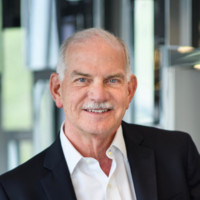
Professor Vincent Poor, Princeton University
H. Vincent Poor is the Michael Henry Strater University Professor at Princeton University,
where his interests include information theory, machine learning and network science, and their
applications in wireless networks, energy systems, and related areas.
He is a member of U.S. National Academy of Engineering and U.S. National Academy of Sciences,
and also a foreign member of the Chinese Academy of Sciences, the Royal Society and other national
and international academies. Other recognition of his work includes the 2017 IEEE Alexander Graham Bell
Medal and honorary doctorates from several universities in Asia, Europe and North America.
|
|
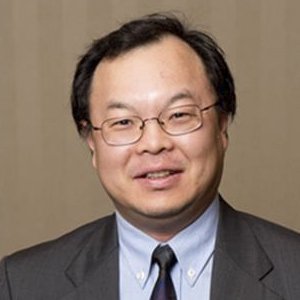
Dr. Junyi Li, Qualcomm.
Junyi Li is a Vice President of Engineering and Qualcomm Fellow at Qualcomm. Junyi was a key inventor of Flash-OFDM,
the first commercially deployed OFDMA-based mobile broadband wireless communications system. He was a co-founder of Flarion Technologies,
a startup acquired by Qualcomm in 2006. Prior to that, he was with Bell Labs research. Since joining Qualcomm, Junyi has spearheaded
research projects on D2D communications, V2V communications, and mmWave communications. He received the Qualcomm IP Excellence Award
in 2020 and the 2024 Thomas Edison Patent Award. Currently he holds more than 2,700 U.S. granted patents. He is a Fellow of the IEEE
and co-authored two books, “OFDMA Mobile Broadband Communications,” published by Cambridge University Press, and "Millimeter Wave
Communications in 5G and Towards 6G," published by CRC Press.
|

|
Dr. Stephen F. Smith, Carnegie Mellon University
Stephen F. Smith is a Research Professor of Robotics at Carnegie Mellon University, where he heads the Intelligent Coordination and Logistics Laboratory.
Smith’s research focuses broadly on the theory and practice of next-generation technologies for automated planning, scheduling, and control of
large multi-actor systems. He pioneered the development and use of constraint-based search and optimization models for solving planning and
scheduling problems and has successfully fielded AI-based planning and scheduling systems in a range of application domains. One principal application
focus for many years now has been urban mobility and smart transportation infrastructure. His work on smart traffic signals, which combines concepts
from artificial intelligence and traffic theory, led to development of Surtrac - an innovative decentralized system for real-time urban traffic signal
control that is now deployed in over 40 North American cities. His more recent work in this area has focused on the additional benefits made possible
by real-time connectivity of the traffic signal control system with vehicles. Smith has published over 325 technical papers in the areas of automated
planning and scheduling, search-based optimization, multiagent systems and machine learning, and he has received numerous research and best paper awards.
He is a Fellow of the Association for the Advancement of Artificial Intelligence (AAAI) and currently serves as AAAI President.
|

|
Professor Jian Song, Tsinghua University
Jian Song, who is also Director of National Digital Television Engineering Lab of China in Beijing, is a full Professor of Department of
Electronic Engineering, Tsinghua University in 2025 after working with the industry in USA, and also with Tsinghua Shenzhen International
Graduate School. He has been working in quite different areas including wireless communications, satellite communications, visible light
communications, digital broadcasting, and the network convergence with primary focus on physical layer technologies. He is quite active
with the International Telecommunication Union, and is the founding Editor-in-Chief of its academic journal “The Intelligent and Converged Networks”.
Dr. Song is Fellow of IEEE, IET, Chinese Institute of Communications, and Chinese Institute of Electronics.
|